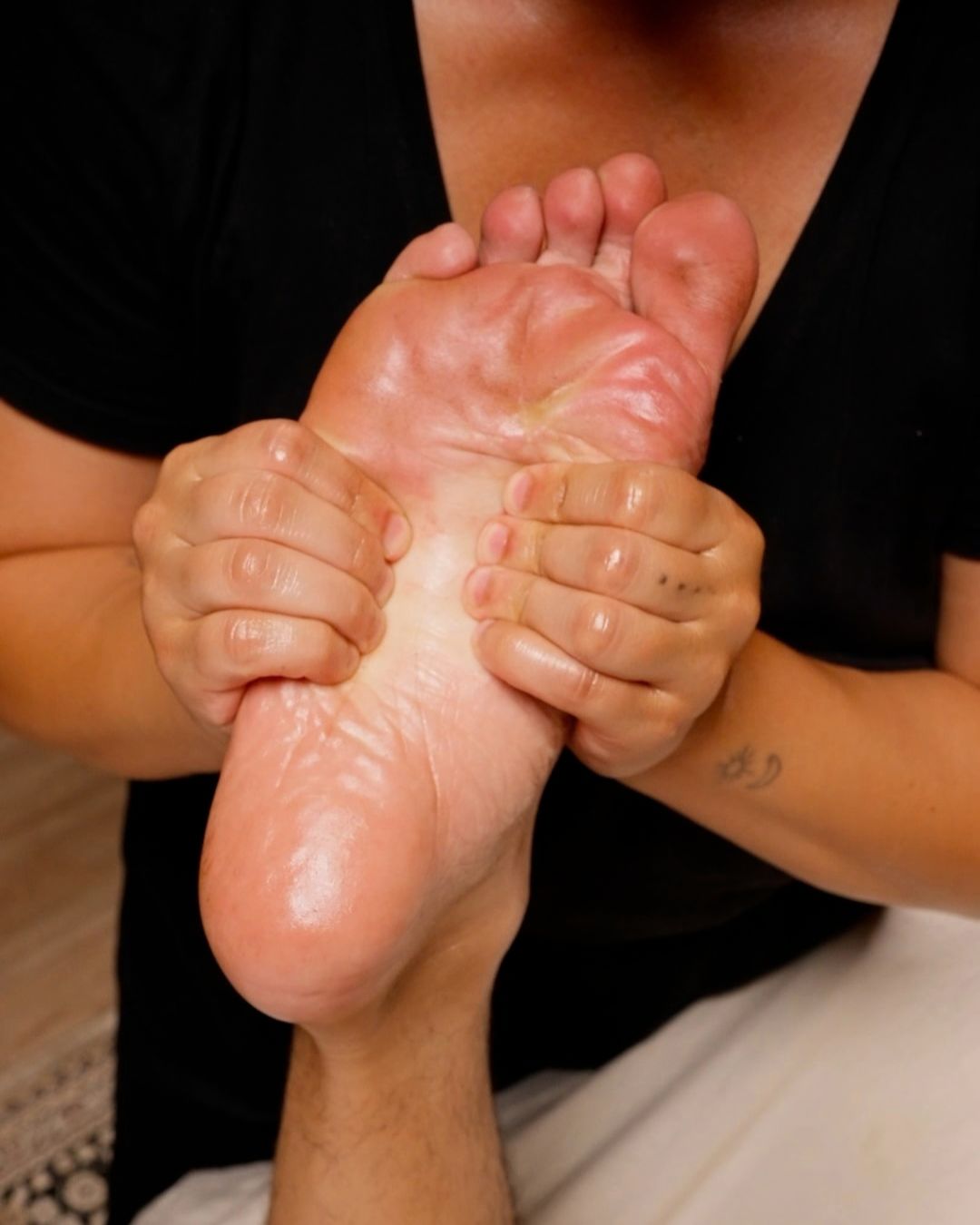
What is reflexology?
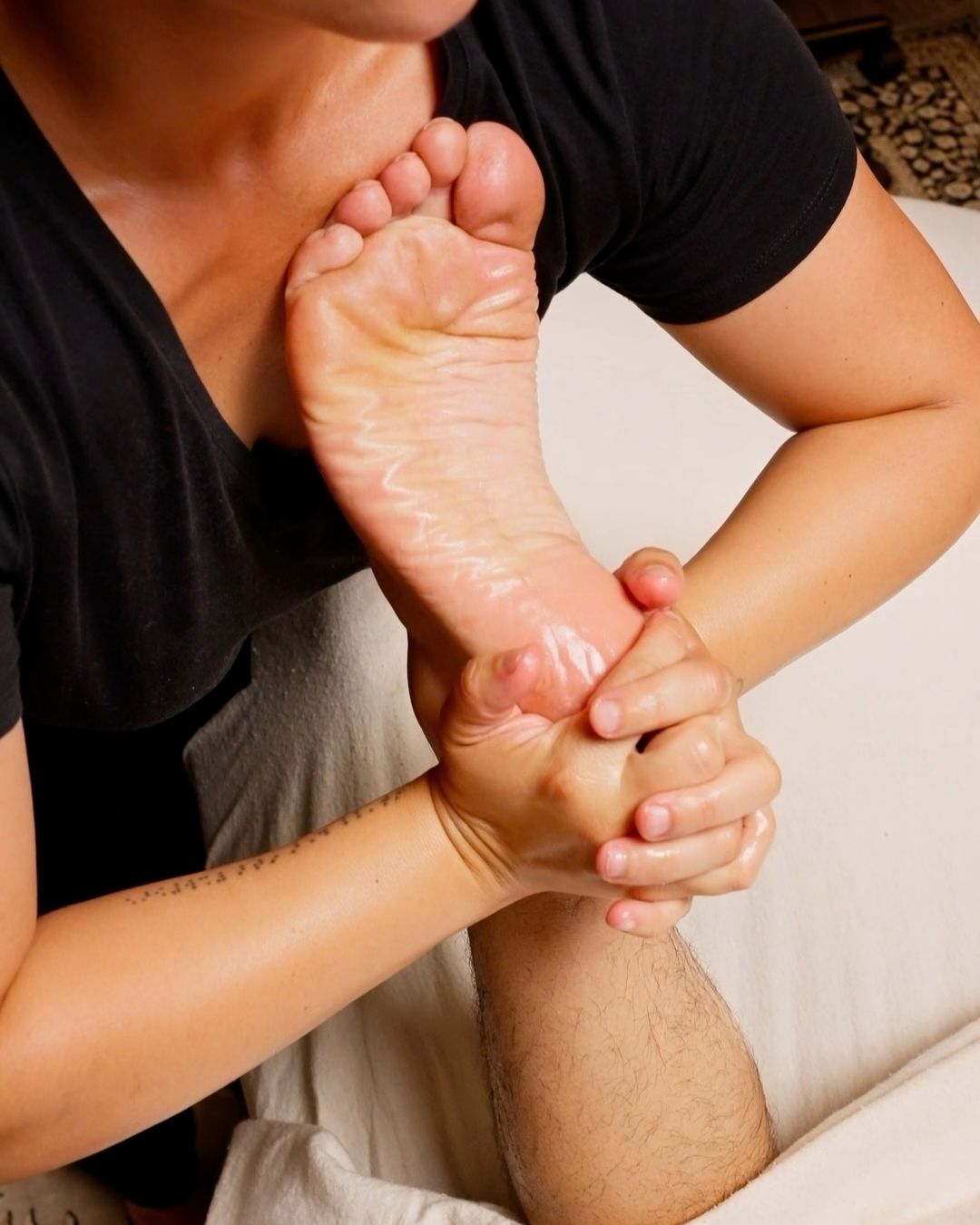
Reflexology is firm, precise thumb and finger pressure on small zones of the feet, hands or ears, usually without oil. It's based on the idea that each zone corresponds to another part of the body, so the feet and hands hold a map of the whole person.
A reflexologist works through that map one zone at a time, adjusting the pressure as they go. That makes it different from a foot massage, which relaxes the muscles of the foot with kneading and stroking.
Science hasn't proven the map, and we won't pretend it has. What people feel is simpler: deep relaxation, feet or hands that feel lighter, and a head that finally goes quiet.
Where reflexology comes from
Modern reflexology starts with zone therapy, which William Fitzgerald, an American ear, nose and throat doctor, introduced in 1913 with Edwin Bowers. Fitzgerald divided the body into ten vertical zones and claimed that pressure in one part of a zone affected the rest of it.
In the 1930s and 1940s, Eunice Ingham, a nurse and physiotherapist, mapped the whole body onto the feet and renamed zone therapy "reflexology" (Wikipedia). Most foot charts used today come from her work.
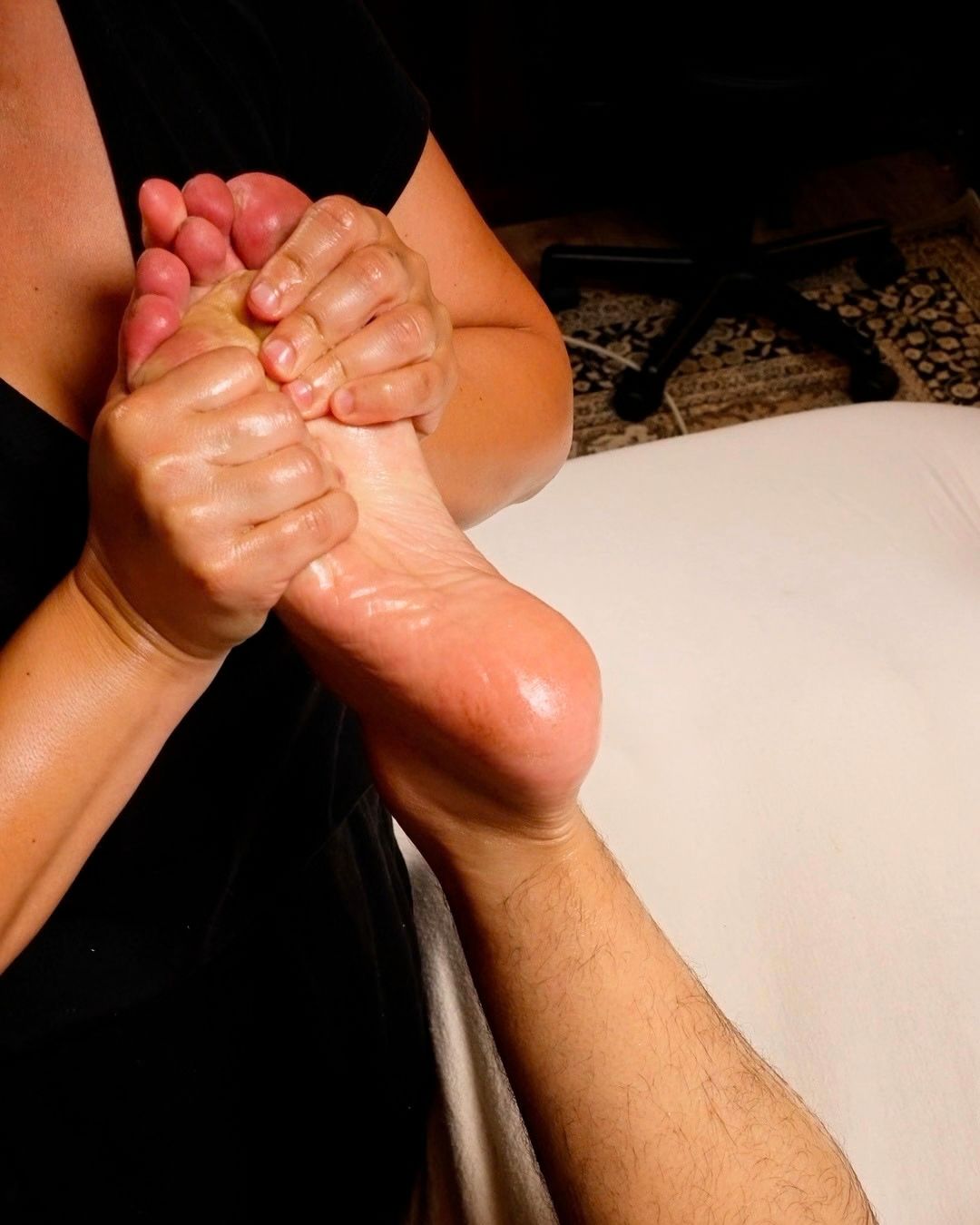
The foot reflexology chart
A foot reflexology chart shows which part of the sole is linked to which part of the body. The right foot is said to mirror the right side of the body and the left foot the left side. Charts vary from school to school, but most agree on the broad layout below.
- Toes: the head, brain and sinuses.
- Ball of the foot: the chest, lungs and heart area.
- Upper arch: the upper abdomen, such as the stomach and liver.
- Lower arch: the lower abdomen and intestines.
- Heel: the pelvis, hips and lower back.
- Inner edge: the spine, from the neck at the big toe down to the tailbone at the heel.
Hand reflexology charts follow the same logic, with the fingertips for the head and the base of the palm for the pelvis. The zones are smaller, so the pressure has to be more precise.
Foot, hand and ear reflexology
Foot reflexology is the most common form. At Aixa's it's 45 minutes on your soles, toes and lower legs, and you stay fully dressed. It suits people who are on their feet all day, or who simply want to switch off.
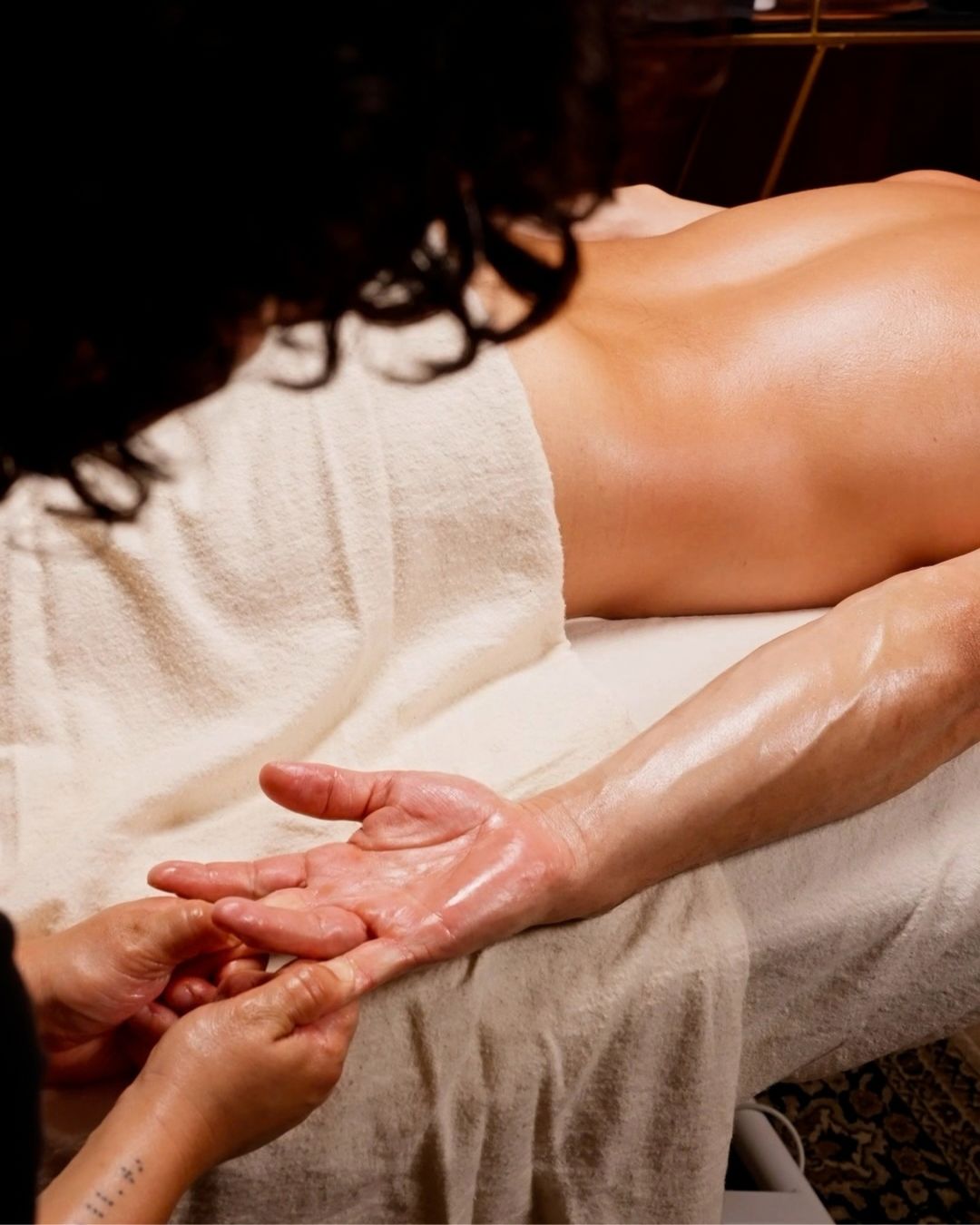
Hand reflexology works the palms, fingers, wrists and forearms. It's a good choice if you type, grip or lift all day, or if you'd rather not have your feet touched.
Ear reflexology applies the same idea to the ear. We don't offer it at Aixa's Bio Spa.
What the research says about reflexology
The evidence is mixed, and it depends on what you hope reflexology will do. A 2011 systematic review of 23 randomized trials found that the methods were often poor. Nine high-quality trials were negative and five were positive. The authors concluded that the best evidence does not convincingly show reflexology to be an effective treatment for any medical condition.
Studies on how people feel are more encouraging. A 2020 meta-analysis of 26 randomized trials with 2,366 adults found that foot reflexology improved depression, anxiety and sleep quality compared with control groups. Longer sessions and longer programs helped sleep more. The authors still called for larger, better-designed trials.
So reflexology is best seen as a way to relax and feel calmer, with some evidence for anxiety and sleep. It isn't a medical treatment and doesn't replace your doctor. Our guide to the benefits of reflexology goes through the research in more detail.
What reflexology is good for
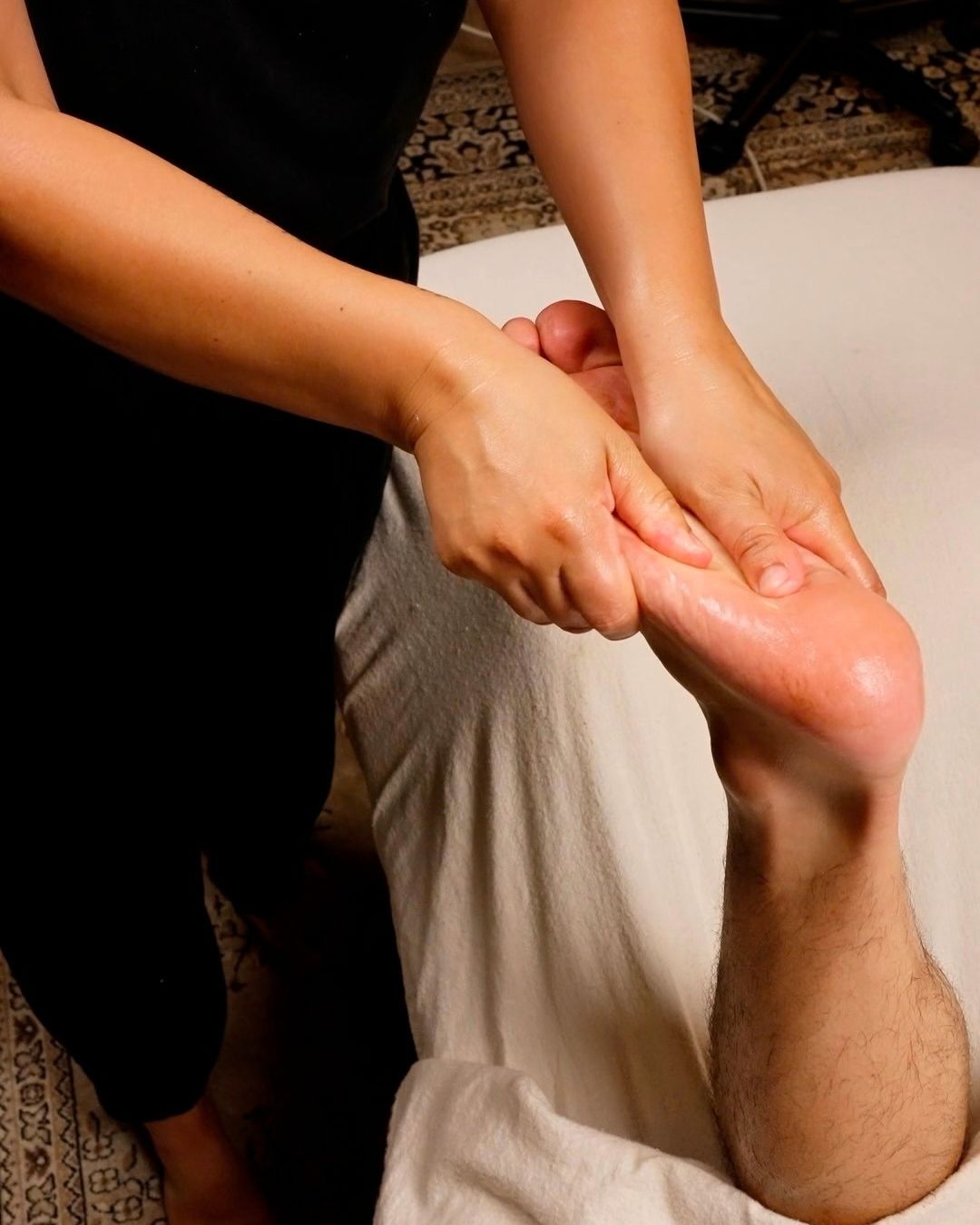
Most people book reflexology to relax deeply. Afterward they usually feel calm, a little sleepy, and lighter in their feet or hands, and many say they sleep well that night. It also suits people who want a deep reset without undressing.
Some spots may feel tender during the session. That usually means tight tissue in that spot, and your therapist will ease off if you ask.
Reflexology vs massage
A massage works the muscles of a whole area with broad strokes. Reflexology works small, precise zones on the feet or hands with firm pressure. If your back and shoulders are the problem, book a body massage. If you want to switch off completely, or your feet or hands need the attention, book reflexology. You can also have both in the same visit.
What happens in a reflexology session
- You take off your shoes and socks and lie back, fully dressed, in a quiet room.
- A quick check-in: where you're sore, how much pressure you like, and any health notes.
- Your therapist works the reflex zones of your soles and toes, one zone at a time, with firm, precise pressure.
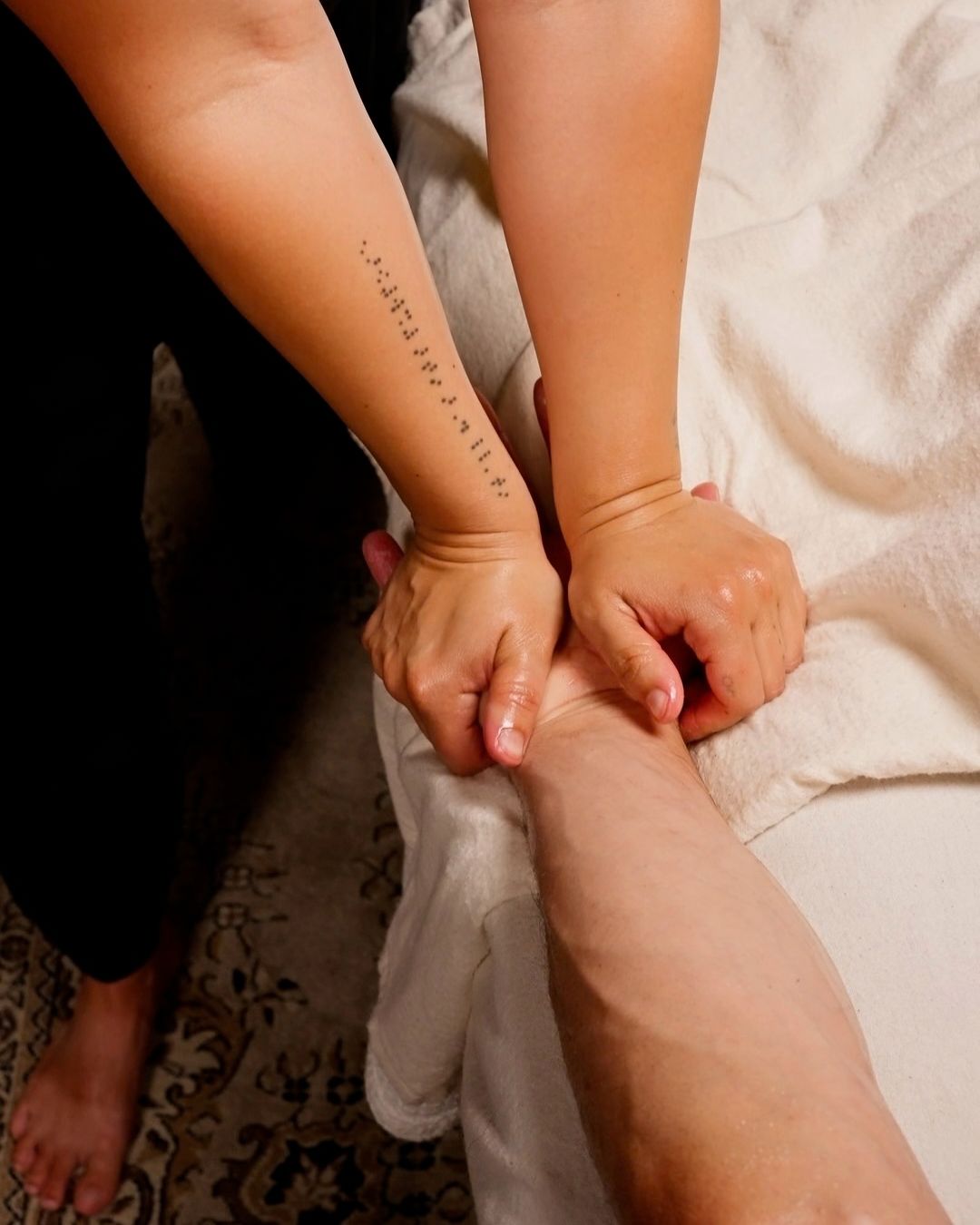
- For foot reflexology, the lower legs are worked too.
A session lasts 45 minutes. Afterward, drink some water, take it easy for the rest of the day, and notice how you sleep that night.
Who should not get reflexology
We don't offer reflexology during pregnancy. Tell us before you book if you have a recent injury, an open wound, a rash or an infection on your feet or hands, a blood clot or circulation problem, gout, or recent surgery. When in doubt, check with your doctor first.
Is reflexology covered by insurance in Canada?
Often, but it depends on your plan. According to the Reflexology Association of Canada, some plans cover a percentage of each session, such as 80%, while others pay a set amount, such as $25 per session. Many plans also accept reflexology under a wellness spending account.
Some insurers only cover reflexology given by a Registered Canadian Reflexology Therapist (RCRT). At Aixa's, reflexology is given by registered massage therapists trained in Aixa's methods, and you get a receipt. Ask your insurer what your plan requires before you book.
Reflexology in Montreal at Aixa's Bio Spa
Reflexology at Aixa's Bio Spa is 45 minutes in a private room: foot reflexology from $135, hand reflexology from $125. Book both in the same visit for 90 minutes of reflexology, or pair either one with a cranial or body massage.
Our approach is trauma-informed: your comfort, consent and pace come first, and you choose the pressure. We're at 3859 Boulevard Décarie in NDG, open 7 days from 10 am to 9 pm, and reflexology is also offered at our Saint-Sauveur spa in the Laurentides.
Reflexology FAQ
Does reflexology hurt?
It shouldn't. The pressure is firm, and you choose how firm. Some spots may feel tender, which usually means tight tissue there. Tell your therapist and they'll ease off.
Should I choose foot or hand reflexology?
Choose foot reflexology if you're on your feet all day or want the deepest relaxation. Choose hand reflexology if you work with your hands, type all day, or would rather not have your feet touched. Both last 45 minutes.
How often should I get reflexology?
It's up to you. Some people book once a month to stay on top of stress. Others come when their feet, or their week, feel heavy.
Can I do reflexology on myself?
You can press gently on your own palms and soles between sessions, and it's a nice habit. A session is different: someone else works every zone with steady pressure while you rest.
Can I get reflexology while pregnant?
No. We don't offer reflexology during pregnancy because of certain reflex points. Our prenatal body massage is designed for pregnancy.
Sources
- Wikipedia: Reflexology
- Ernst E, Posadzki P, Lee MS. Reflexology: an update of a systematic review of randomised clinical trials. Maturitas, 2011
- Wang WL et al. Effect of foot reflexology intervention on depression, anxiety, and sleep quality in adults: a meta-analysis and metaregression of randomized controlled trials. Evidence-Based Complementary and Alternative Medicine, 2020
- Reflexology Association of Canada: Insurance coverage